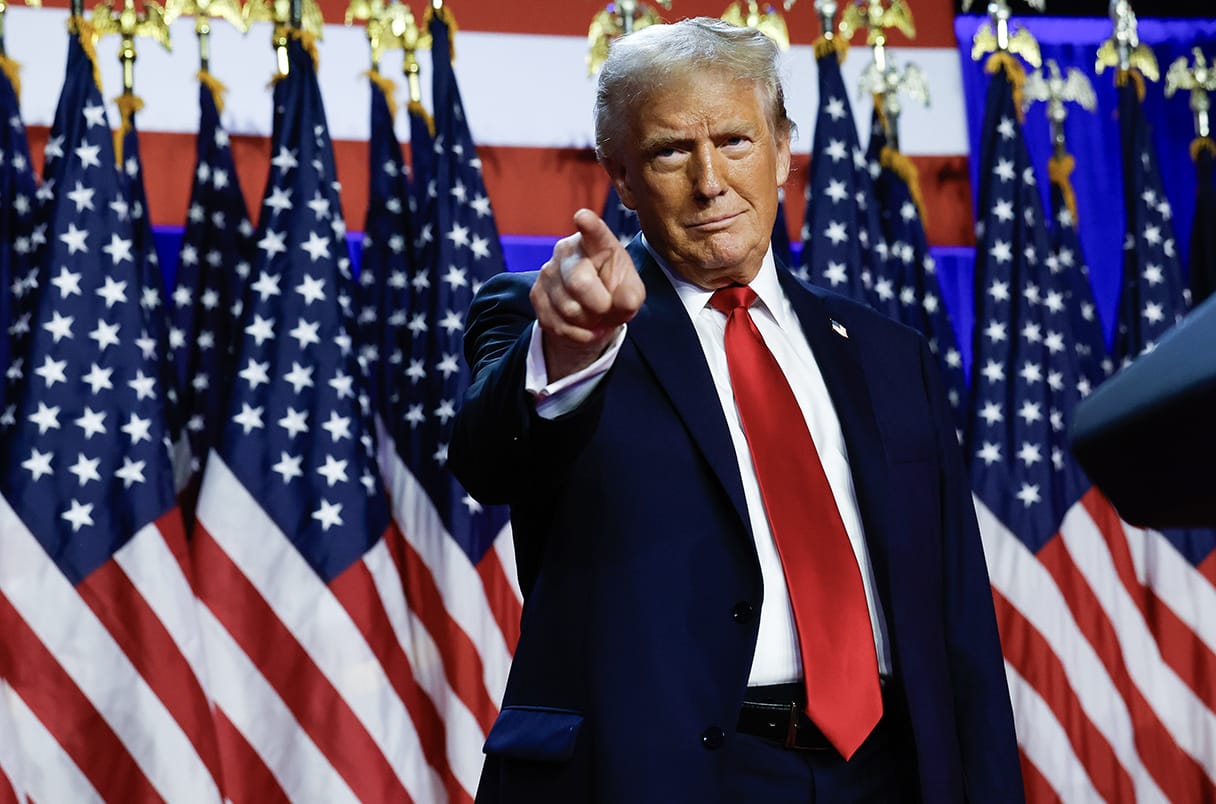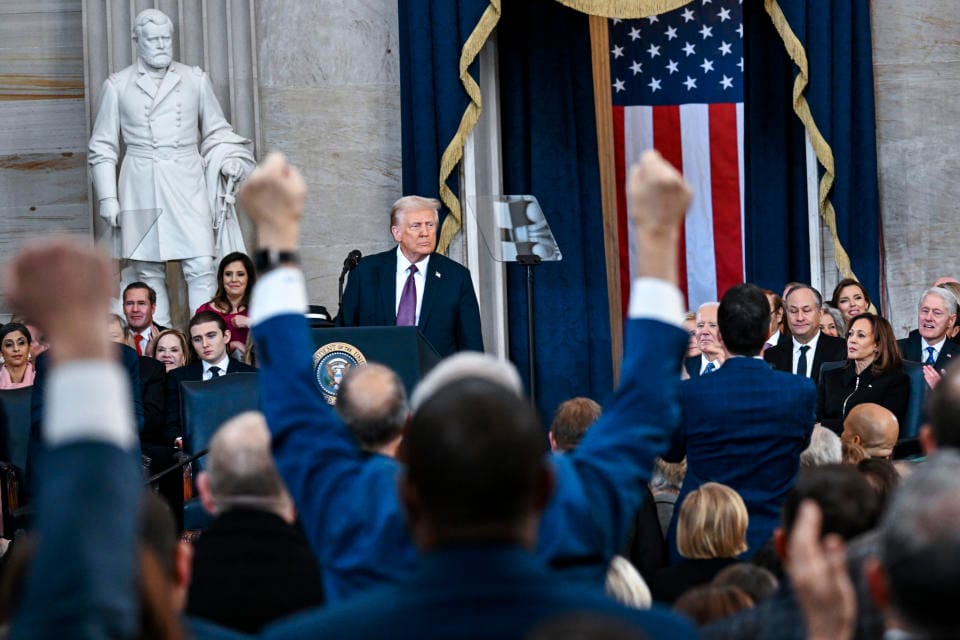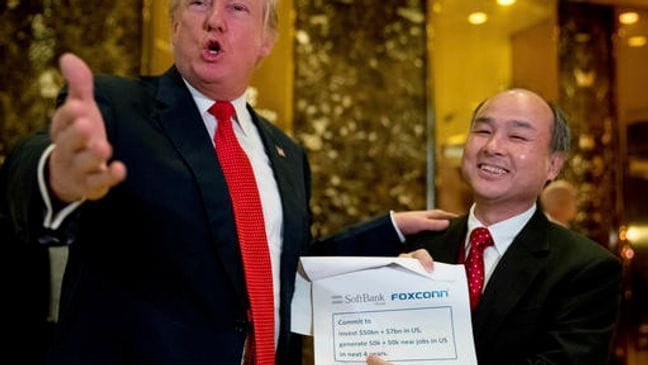
In a bold announcement expected to reshape America’s technological landscape, President-elect Donald Trump is set to join SoftBank Group’s CEO Masayoshi Son at Trump’s Mar-a-Lago residence. Their declaration will mark the launch of a $100 billion investment plan aimed at various U.S. projects over the next four years. This venture will signal a commitment to innovation and job creation, particularly in artificial intelligence (AI) and emerging technologies.
This investment plan comes during a time of immense scrutiny regarding Trump’s previous promises. Past investments with grand announcements rarely met the anticipated goals. Yet, in this case, anticipation runs high as both parties look to capitalize on the momentum created by this high-profile partnership.
The SoftBank Legacy: A Track Record of Investment
Founded in 1981, SoftBank Group has emerged as a leading force in global technology investment. Masayoshi Son, the company’s visionary founder and CEO, boasts a remarkable history of backing transformative companies. His successes include early investments in Alibaba and Yahoo, which became titans of the internet era. However, Son’s journey hasn’t been without setbacks. The spectrum of his ventures contains stark reminders, such as the collapse of WeWork, which cast a shadow over the firm’s otherwise stellar portfolio.
Focus on Job Creation

During the upcoming announcement, it’s expected SoftBank will engage in commitments transcending mere numbers. Son promised that the investment will generate a minimum of 100,000 jobs in the United States. These opportunities will likely concentrate heavily on the technology sector, particularly in AI and infrastructure.
“My confidence level in the economy of the United States has tremendously increased with his victory,” Son stated. His confidence hints at an optimistic future for the technology landscape during Trump’s administration.
Navigating Past Deals and Challenges
Given the complexities surrounding such sizeable investments, one might ponder if history will repeat itself. Trump’s past deals, like the much-touted $10 billion Foxconn investment in Wisconsin, fell short of their original ambitions. Although Foxconn initially sparked excitement by promising 13,000 jobs, the reality post-COVID revealed a drastically scaled-back vision due to market shifts. This history urges a cautious approach to the forthcoming SoftBank initiative.
However, this time, Trump and his team appear determined to avoid the pitfalls of previous declarations. During the announcement, Karoline Leavitt, Trump’s incoming White House press secretary, claimed, “He’s not even in the Oval Office yet, and he’s already delivering on his promises for the American worker.” Such assurances seek to build public trust, though skepticism remains among analysts and the public alike.
The Politically Charged Environment
The context surrounding this announcement is as politically charged as ever. Trump’s administration has faced criticism for its aggressive tariff threats against Mexico and Canada. These moves could disrupt trade relations and potentially hinder the very economic growth he seeks to foster. Despite these concerns, the commitment from SoftBank offers a glimmer of hope and a sign of support for his policies, particularly in areas like AI.
Trump’s recent post on Truth Social, highlighting a promise of expedited approvals for investors, further demonstrates his efforts to reassure big players like SoftBank. He proclaimed, “Anyone making a $1 billion investment in the United States will receive fully expedited approvals and permits.” This enticing promise seeks to dismantle bureaucratic hurdles that may have annoyed potential investors in the past.
Economic Implications of the Investment
As one examines the ramifications of this $100 billion investment, it becomes clear that the financial benefits extend beyond job creation. The implications for economic growth are substantial. With SoftBank’s capital expected to focus on innovative sectors, the investment could propel American enterprises to the forefront of global technology. Emerging industries fueled by AI, robotics, and advanced infrastructure represent the future of work.
The Role of Emerging Technologies

Emerging technologies are not merely trends; they symbolize the next wave of economic disruption. From driverless cars to AI-driven diagnostics, these innovations promise to redefine industries. SoftBank’s commitment signals confidence in the U.S. as a growth hub for these technologies.
Additionally, the investment encapsulates a broader strategic goal: positioning the U.S. as a leader in artificial intelligence. This nation strives to foster an environment conducive to developmental breakthroughs, striving for technological supremacy in a global economy defined by rapid change.
Challenges Ahead: Economic and Political Turbulence
However, as the Trump administration prepares to take shape, significant challenges loom on the horizon. Analysts warn that Trump’s proposed tariffs on imports could induce inflationary pressures, ultimately hampering growth. The outcomes may require the U.S. Federal Reserve to reconsider its interest rate strategy, potentially prolonging elevated rates.
In light of these complexities, stakeholders must maintain a keen awareness of responses to this profound announcement. The interplay between economic policy and external engagements will profoundly shape the investment’s success.
Conclusion: A Pivotal Moment for America
The upcoming joint announcement by Trump and Son stands to be a pivotal moment for both American industry and global technology investment. By committing to a $100 billion investment, SoftBank and Trump align closely on shared goals of innovation and growth. This plan could usher in a new era of economic prosperity, reshaping the United States as a beacon for advanced technology and job creation.
While skepticism persists, the singular focus on job creation and investment offers a compelling narrative for the future. Observers will undoubtedly watch closely as the formal announcement unfolds, eager to see what this ambitious plan entails for America’s economic landscape.
Sources: