Trump’s Pick for Secretary of State: Marco Rubio
Florida Senator Marco Rubio, once a fierce critic of Donald Trump, is now set to lead U.S. foreign policy as the Secretary of State. Rubio’s nomination, announced by the president-elect on Wednesday, underscores a pivot toward a hawkish stance in international relations.
Rubio, the 53-year-old Cuban American, brings significant foreign policy credentials. Serving as Vice Chair of the Senate Intelligence Committee and a member of the Foreign Relations Committee, Rubio has long been a staunch advocate for robust U.S. engagement on the global stage.
In a statement shared on social media, Rubio expressed gratitude for the opportunity: “As Secretary of State, I will work every day to carry out [Trump’s] foreign policy agenda. Under the leadership of President Trump, we will deliver peace through strength and always put the interests of Americans and America above all else.”
If confirmed, Rubio will make history as the first Latino Secretary of State.
From Rivals to Allies
Rubio’s relationship with Trump has evolved significantly since their contentious 2016 presidential primary. Once derided as “Little Marco” by Trump, Rubio criticized the former president in equally colorful terms. Despite this tumultuous beginning, the Florida senator became a staunch supporter of Trump’s policies, particularly during his re-election campaign.
By aligning himself with Trump’s “America First” agenda, Rubio secured his place as a trusted ally in the second Trump administration. Experts believe his nomination reflects the administration’s strategic decision to focus on a hardline approach to adversaries like China, Iran, and Russia.
Foreign Policy Hawk
A vocal advocate for confronting authoritarian regimes, Rubio has consistently championed a tough stance on nations such as China and Iran. His tenure in the Senate has been marked by efforts to curb Beijing’s influence and hold Chinese officials accountable for alleged human rights abuses.
“Rubio’s appointment to one of the most important positions is significant,” said Swaran Singh, a diplomacy expert. “It signals that the administration will double down on its China-focused policies.”
Rubio has also been critical of regimes in Venezuela and Cuba, emphasizing the need for democratic reforms. Fellow Cuban American Congressman Carlos Gimenez celebrated the nomination, tweeting, “The tyrants in Havana, Caracas, and Managua will not sleep today. Their time is up.”
A Shift in U.S.-China Relations
Rubio’s hardline approach toward China has drawn international attention. As Secretary of State, he is expected to champion policies aimed at curbing China’s economic and geopolitical ambitions.
During his time in the Senate, Rubio pushed for legislation like the Uyghur Forced Labor Prevention Act, which targeted forced labor practices in China’s Xinjiang region. Beijing, in turn, sanctioned Rubio, highlighting the strained relations between the two nations.
Analysts predict that Rubio’s leadership will intensify tensions with China, particularly concerning Taiwan and trade policies. Carl-Johan Carlstedt, a geopolitical analyst, remarked, “Rubio will likely expand targeted sanctions and export controls on China, further complicating U.S.-China relations.”
Balancing Hawkish Policies with Diplomacy
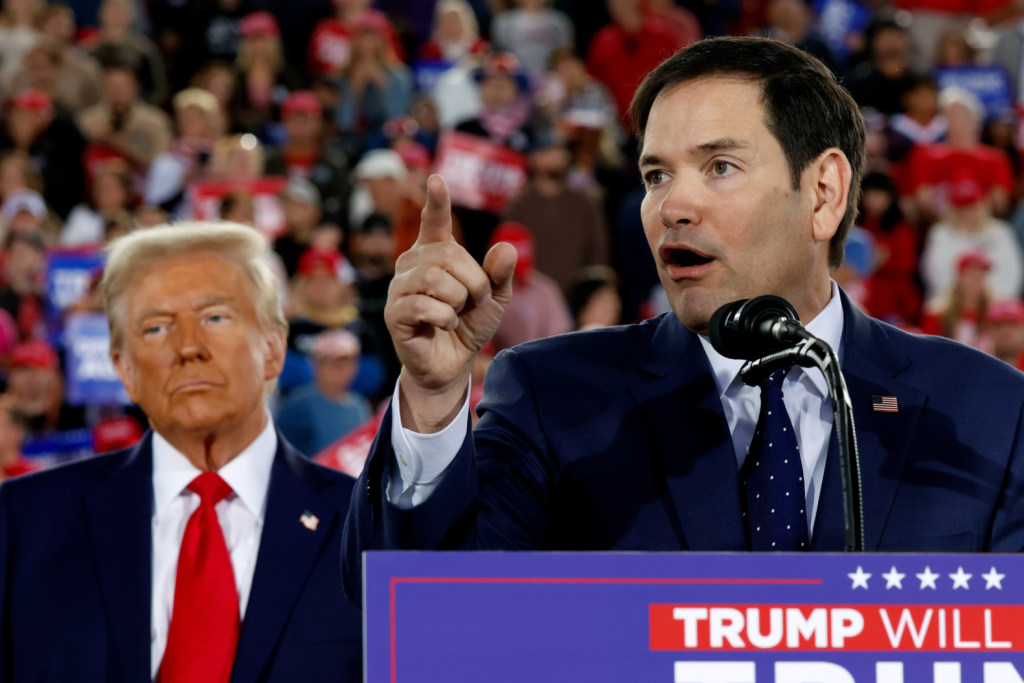
While Rubio’s hawkish reputation precedes him, some experts believe his new role will require a balance between tough rhetoric and practical diplomacy. Chintamani Mahapatra, a foreign policy scholar, suggested that while Rubio may pursue aggressive policies, his ultimate focus will be on advancing U.S. economic and security interests.
“Rubio will likely take a hawkish approach to China but ultimately aim for compromises that benefit America,” Mahapatra said.
Historical Significance
Rubio’s nomination carries historical weight, marking the first time a Latino has been selected as the nation’s top diplomat. As the son of Cuban immigrants, Rubio’s rise to one of the highest offices in the land reflects the evolving face of American leadership.
Trump emphasized Rubio’s credentials in his announcement: “Marco is a highly respected leader and a powerful voice for freedom. He will be a strong advocate for our nation, a true friend to our allies, and a fearless warrior who will never back down to our adversaries.”
Rubio’s Vision for U.S. Diplomacy
Rubio’s statements following his nomination suggest a commitment to maintaining Trump’s foreign policy ethos. His support for “peace through strength” echoes the administration’s focus on prioritizing American interests while projecting power abroad.
As Rubio prepares for confirmation hearings, the international community will be watching closely. His approach to critical issues, including relations with China, the ongoing Russia-Ukraine conflict, and Middle Eastern stability, will shape America’s foreign policy in the years to come.
Conclusion: A Pivotal Appointment
Marco Rubio’s nomination as Secretary of State signals a definitive shift in U.S. foreign policy under the Trump administration. His hawkish views, combined with his political adaptability, position him to lead America’s diplomatic efforts in a complex global landscape.
As Rubio himself noted, the role is a “tremendous responsibility.” How he balances his hardline stance with the need for effective diplomacy will determine his success in this historic role.
Sources:
https://www.bbc.com/news/articles/c8rl01zjmgjo
https://www.aljazeera.com/news/2024/11/13/trump-taps-cuban-american-marco-rubio-to-lead-the-us-state-department
https://www.the-independent.com/asia/china/trump-marco-rubio-state-secretary-china-b2647635.html