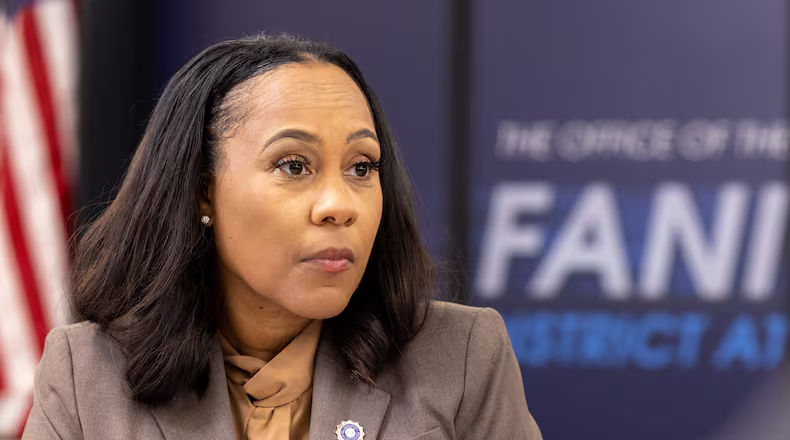
In a landmark decision on December 19, 2024, the Georgia Court of Appeals disqualified Fulton County District Attorney Fani Willis from prosecuting President-elect Donald Trump in a high-profile election interference case. This ruling carries significant implications for the ongoing litigation surrounding Trump’s alleged efforts to overturn the results of the 2020 presidential election.
The Background of the Case
Initially, Trump, along with 16 co-defendants, faced charges related to racketeering and attempts to manipulate the electoral outcome in Georgia. This legal pursuit aimed to address actions that many believe threaten the integrity of the democratic process. The case has played a critical role in the national discourse surrounding accountability in politics, especially regarding a former president.
Disqualification Decision Breakdown
The court’s 2-1 decision came as a result of perceived conflicts of interest involving Willis and her former deputy, Nathan Wade. The panel concluded that the presiding Fulton County Superior Court judge, Scott McAfee, erred by not disqualifying Willis initially. Judge Trenton Brown emphasized that the remedy imposed by McAfee—requiring Wade’s resignation while allowing Willis to remain in her position—did not adequately restore public confidence. According to Brown, this situation represents a rare instance where disqualification is “mandated” due to the nature of the allegations involved.
The Legal Implications

The court stated, “the assistant district attorneys — whose only power to prosecute a case is derived from the constitutional authority of the district attorney who appointed them — have no authority to proceed.” This assertion indicates that without Willis at the helm, any ongoing legal efforts against Trump and his associates must cease until a new prosecutor is appointed. However, the indictment against Trump remains intact, signaling that legal recourse could continue albeit under new leadership.
Trump’s Response
In response to the ruling, Trump characterized the entire prosecutorial effort as flawed. He claimed, “the whole case has been a disgrace to justice,” suggesting motivations rooted in political bias. Trump’s comments reflect a broader narrative he has echoed repeatedly in various contexts—claiming that the legal system has been weaponized against him as a political adversary.
Insights on Prosecutorial Conduct
The revelations about Willis’s relationship with Wade sparked intense scrutiny throughout the proceedings. During previous hearings, Willis provided testimonies asserting that the romantic entanglement did not interfere with her judgment or the prosecutive course of action. Defense arguments hinged on allegations that their connection could influence her decision-making in pivotal moments. Specifically, co-defendant Michael Roman’s attorney raised concerns about perceived “self-dealing,” hinting at a potential kickback scheme.
The Reaction from Legal Experts
Legal analysts and commentators have voiced varying opinions on the implications of the disqualification. Some express concern about the integrity of the judicial process, especially considering the public’s perception of those involved. Others highlight that prosecutors must always remain above reproach, thus making the ruling a necessary step for ensuring justice remains impartial.
John Yoo, a law professor at UC Berkeley, discussed the ramifications of the ruling during an interview on Fox News. He indicated that such disqualifications are rare but significant, serving to bolster public trust in governmental institutions. The dialogue surrounding the decision underscores the belief that procedural integrity must be upheld, particularly in cases involving high-profile figures.
Future of the Case
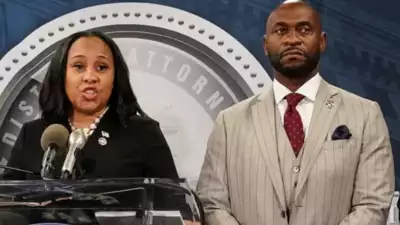
Looking ahead, the legal fate of Trump and his co-defendants remains uncertain. Although the appeal to the Georgia Supreme Court has been indicated by Willis’s office, any further proceedings are likely to encounter substantial delays, especially considering Trump’s impending presidency. Critics argue the timeline could extend indefinitely, frustrating those eager for resolution.
Several co-defendants, including significant figures like Sidney Powell and Kenneth Chesebro, have already pleaded guilty in earlier proceedings, suggesting they aim to minimize their legal repercussions. The involvement of these individuals complicates the overall narrative of the case. Their cooperation could lead to further developments that may influence both public perception and legal outcomes.
The Broader Political Context
This legal saga unfolds against a backdrop of intense political division in the United States. Trump’s narrative of victimization resonates deeply with his supporters, who perceive these legal battles as unjust attacks on their chosen leader. Conversely, his opponents view ongoing prosecutions as necessary actions to uphold democratic principles.
The disqualification of Fani Willis adds another layer of complexity to this already multifaceted scenario. As discussions on the integrity of the electoral process continue, the case remains central to debates about justice, accountability, and political norms in contemporary America.
Conclusion: Striving for Integrity
In summary, the disqualification of Fani Willis serves as a critical juncture in the ongoing legal battles involving Donald Trump. The ruling highlights the necessity for objective, competent, and ethical prosecutorial conduct, particularly in politically charged cases. Whether the new prosecutor can navigate the complexities of the case remains to be seen, but the unfolding events will undoubtedly play a significant role in shaping the future of political accountability in America.
Sources:


